The State of the Pipeline: September Edition
By Samantha Baker, Founder & CEO of Heat Strategic
Q4 Isn’t the Time to Build Momentum. It’s the Time to Cash It In.
September has a different energy.
Summer is over. Calendars are full again. Leadership teams are looking at year-end targets. Sales is doing the math on what can realistically close. Marketing is looking at what still needs to launch. And somewhere in a meeting, someone is inevitably asking: “Are we going to hit the number?”
September is where that answer starts becoming clear.
If August was the month to sharpen your focus, September is the month to operationalize it.
Because by the time Q4 officially begins, you shouldn't still be figuring out your strategy. You should be executing it.
The strongest organizations aren't entering October with a fresh list of ideas. They're entering with a clear understanding of which accounts matter, which opportunities can move, which campaigns are working, and exactly where Marketing and Sales need to apply pressure.
September is the bridge between pipeline potential and year-end revenue. And you don't have much time to cross it.
Stop Treating Q4 Like a Fresh Start
There's a tendency in business to treat October 1 like a starting gun: New campaigns. New messaging. New sales pushes. New offers. New events. New urgency.
But there's a problem: B2B buying cycles don't care that your fiscal calendar says Q4.
Buyers need time to research, build internal consensus, evaluate alternatives, justify the investment, secure budget, navigate procurement, and get stakeholders comfortable with the decision.
Current B2B research continues to point toward more complex buying environments, emerging channels, and increased pressure on marketers to connect investment to growth.
That means the pipeline you want to close in Q4 needs attention now.
September isn't your warm-up. It's part of the game.
Your Pipeline Needs a Reality Check
This is the month to stop looking at your pipeline as one big number.
A $5 million pipeline doesn't necessarily mean you have $5 million worth of opportunity.
Some opportunities are real. Some are early. Some are stalled. Some have no champion. Some don't have budget. Some haven't responded in six weeks. And some are sitting at 70% probability because nobody has had the courage to change the CRM field.
Pipeline volume can create false confidence. Pipeline movement creates revenue.
So instead of asking: “How much pipeline do we have?”
Start asking: “How much of our pipeline is actually moving?”
Look at:
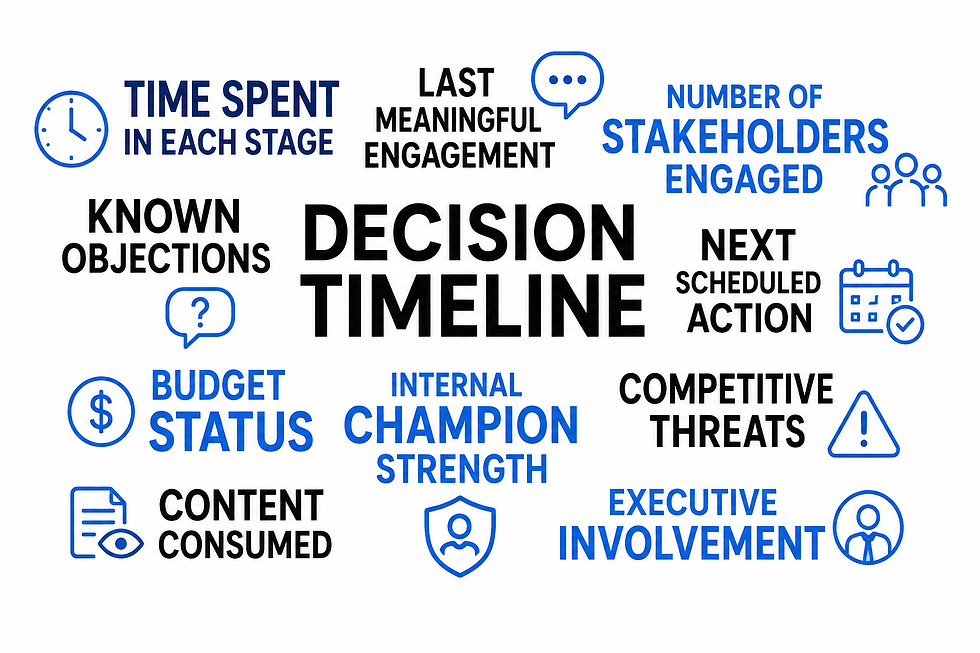
Your CRM should tell you where revenue is progressing—not simply where opportunities exist.
If it can't, that's your September project.
Build Your Q4 Hit List
Last month, we talked about finding your SAM within your TAM. September takes that one step further.
Now you need your Q4 hit list. These are the accounts and opportunities that deserve disproportionate attention because they have the strongest combination of fit, intent, engagement, timing, and revenue potential.
This isn't simply Sales creating a target account spreadsheet. Marketing should know the list. Leadership should know the list. Customer Success may need to know the list. And everyone should understand what needs to happen next.
For each priority account, ask:
Who are we missing?
If you're communicating with one stakeholder inside a complex organization, you don't have account penetration. You have a contact.
What does this buyer still need to believe?
Do they need ROI?
Proof?
Technical validation?
Executive confidence?
Implementation clarity?
Competitive differentiation?
What can Marketing create to help move this opportunity?
A personalized landing page.
A relevant case study.
A business case.
An executive video.
A customer reference.
An industry-specific one-pager.
A comparison guide.
A follow-up campaign.
Who from our organization should become involved?
Sometimes another automated email isn't the answer.
Sometimes it's your CEO.
The closer an opportunity gets to revenue, the more intentional your marketing should become.
Marketing's Job Changes as the Buyer Moves Down Funnel
One of the biggest mistakes organizations make is treating Marketing's job as finished once an opportunity reaches Sales. It's not.
Your marketing strategy should evolve alongside the buyer. At the top of the funnel, you're earning attention. In the middle, you're building understanding. At the bottom, you're reducing risk. That's a very different job.
A buyer evaluating a major purchase probably doesn't need another generic thought leadership article explaining why the category matters. They already believe the category matters. Now they need confidence that you are the right choice.
September is the time to aggressively identify and fill those confidence gaps.
Look at your late-stage pipeline and ask:
What objections are appearing repeatedly?
Where are buyers slowing down?
Which competitors keep entering conversations?
What questions does Sales answer manually over and over?
Where does procurement create friction?
What proof are buyers requesting?
Which stakeholders aren't engaged yet?
Those answers should influence your Q4 content calendar far more than whatever topic happens to be trending on LinkedIn.
Great content strategy isn't built around what you want to say. It's built around what your buyer needs to hear next.
Don't Confuse Automation With Momentum
Automation is becoming embedded into virtually every part of the commercial engine.
And that's a good thing. But there is a danger.
We can automate outreach. We can automate follow-up. We can automate lead scoring. We can automate reporting. We can automate content development. We can automate prospect research.
But automation doesn't automatically create relevance.
The easier it becomes to generate more activity, the more valuable thoughtful, human interaction becomes.
Your buyer can tell the difference between: “Just circling back.”
and “I was thinking about what you said in our last conversation, and here's something that might help.”
The first is a sequence. The second builds a relationship.
As AI increases the volume of communication buyers receive, relevance becomes a competitive advantage. Use automation to create capacity. Then use that capacity to become more human, not less.
September Is Also 2027 Planning Season
Here's where things get interesting. While your team is trying to close 2026, your buyers may already be planning 2027. So should you.
This creates two simultaneous commercial opportunities.
Opportunity #1: Close existing demand.
Help buyers who are already in-market confidently make a decision before year-end.
Opportunity #2: Create next year's demand.
Get into the conversations happening right now around budgets, strategic priorities, vendor evaluations, technology investments, and growth initiatives.
This is why September thought leadership matters.
Your content shouldn't only be asking: “What do buyers need today?”
It should also be asking: “What will executives be discussing in their 2027 planning meetings?”
That's where your brand needs to show up. Not after the budget has been approved. Before it.
How to Make September Work for You
If August was about finding your strongest signals, September is about converting those signals into a coordinated commercial plan.
Start here.
1. Clean the Pipeline
Get brutally realistic about what's active, what's stalled, and what's dead.
A smaller accurate pipeline is more valuable than an inflated one.
2. Identify Your Q4 Hit List
Determine which accounts and opportunities have the strongest combination of fit, intent, engagement, timing, and revenue potential.
Then prioritize accordingly.
3. Map the Buying Committee
Stop marketing to contacts.
Start marketing to accounts.
Identify the financial buyer, champion, technical evaluator, end user, executive sponsor, procurement stakeholder, and anyone else influencing the decision.
4. Find the Confidence Gaps
Determine what each buyer still needs to believe before saying yes.
Then build the content and experiences that answer those questions.
5. Align Marketing + Sales Weekly
Not monthly.
Not at the quarterly business review.
Weekly.
Review priority opportunities, objections, engagement, next actions, content needs, and accounts requiring executive involvement.
6. Start 2027 Conversations Now
If your product or service could reasonably become part of next year's budget, don't wait until January to introduce yourself.
Get into the planning cycle before the budget gets allocated somewhere else.
The September Scorecard
By the end of September, leadership should be able to answer five questions without digging through six dashboards:
Which opportunities are most likely to generate Q4 revenue?
Which accounts are strategically important enough to receive personalized attention?
What is preventing our strongest opportunities from moving forward?
What is Marketing doing specifically to remove those barriers?
What are we doing now to create pipeline for 2027?
If those answers aren't clear, adding another campaign probably isn't going to fix the problem. Clarity will.
The Bottom Line
September is where strategy meets execution. There is still enough time to materially influence Q4.
But there isn't enough time to waste. This isn't the month for random acts of marketing. It's not the month to chase every possible lead. And it's definitely not the month to wait until October to figure out how you're going to hit your year-end number.
Know your pipeline. Know your buyers. Know your highest-value accounts. Know what's preventing them from moving forward. Then align your entire commercial organization around helping the right buyers make the right decision.
Because Q4 shouldn't be when you start creating momentum. It should be when the momentum you've been building all year starts turning into revenue.
If you're ready to close EOY 2026 strong, let's chat.


Comments